A reliable device from the manufacturer with support throughout its entire period of use
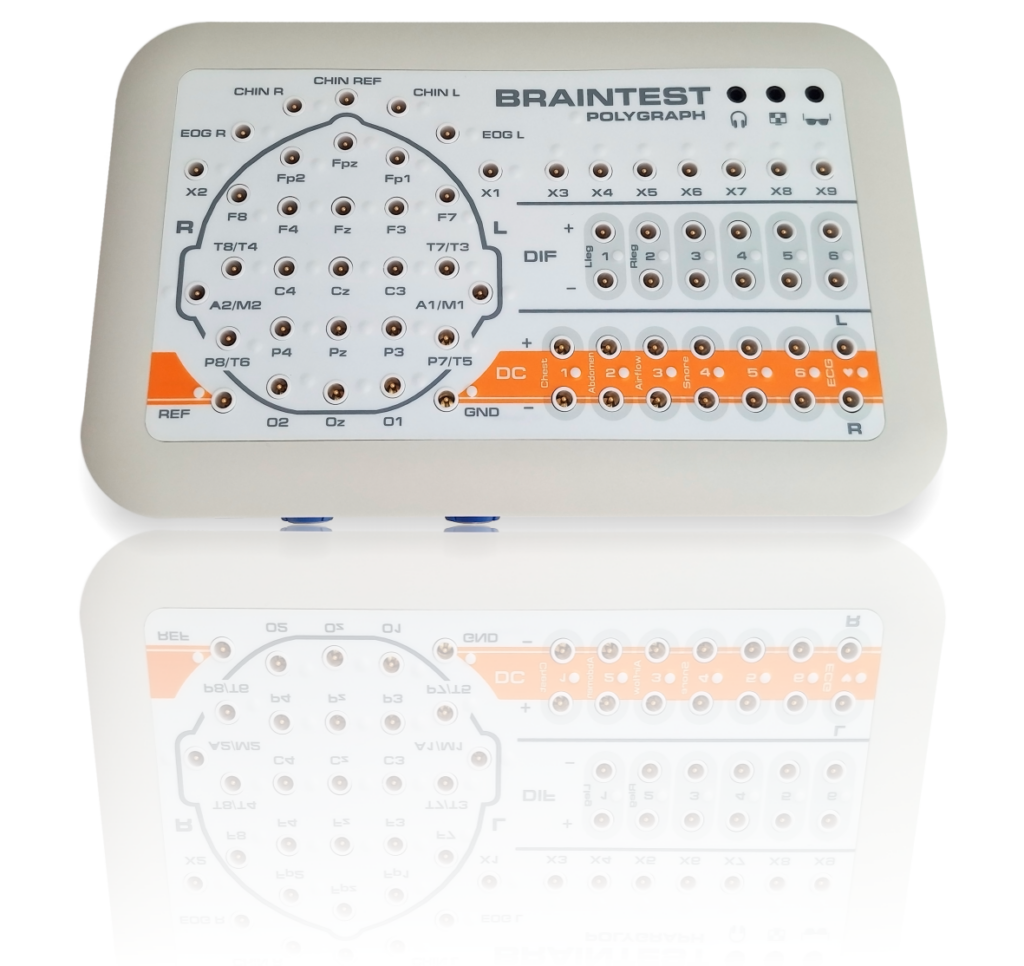
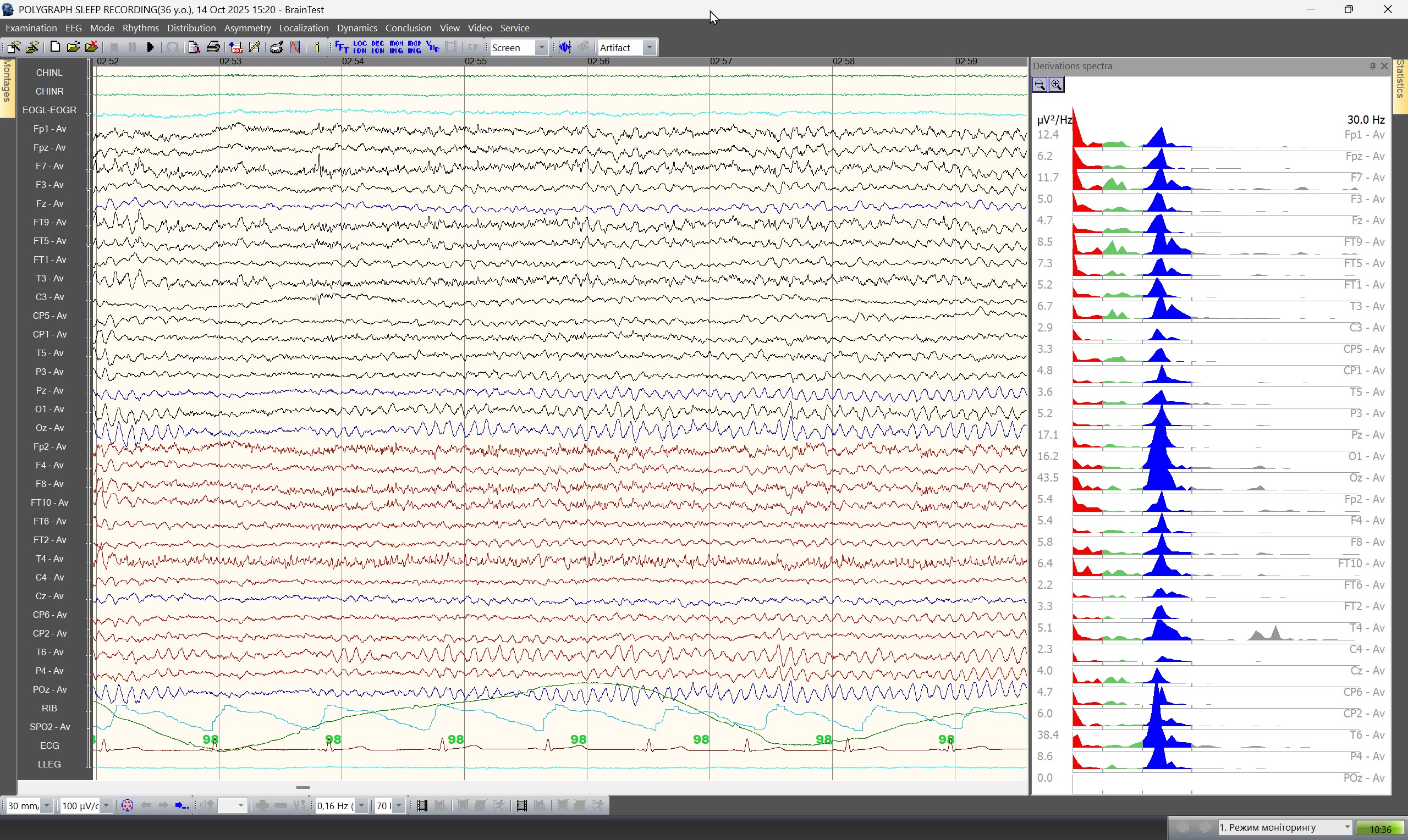
A comprehensive hardware–software platform designed for advanced evaluation of brain electrical activity, with synchronized recording of EEG, ECG, EOG, EMG, peripheral oxygen saturation, respiration, evoked potentials, and video monitoring.
Intended for use in clinical neurophysiology, neurology, sleep medicine, neuropsychology, rehabilitation, and research applications.
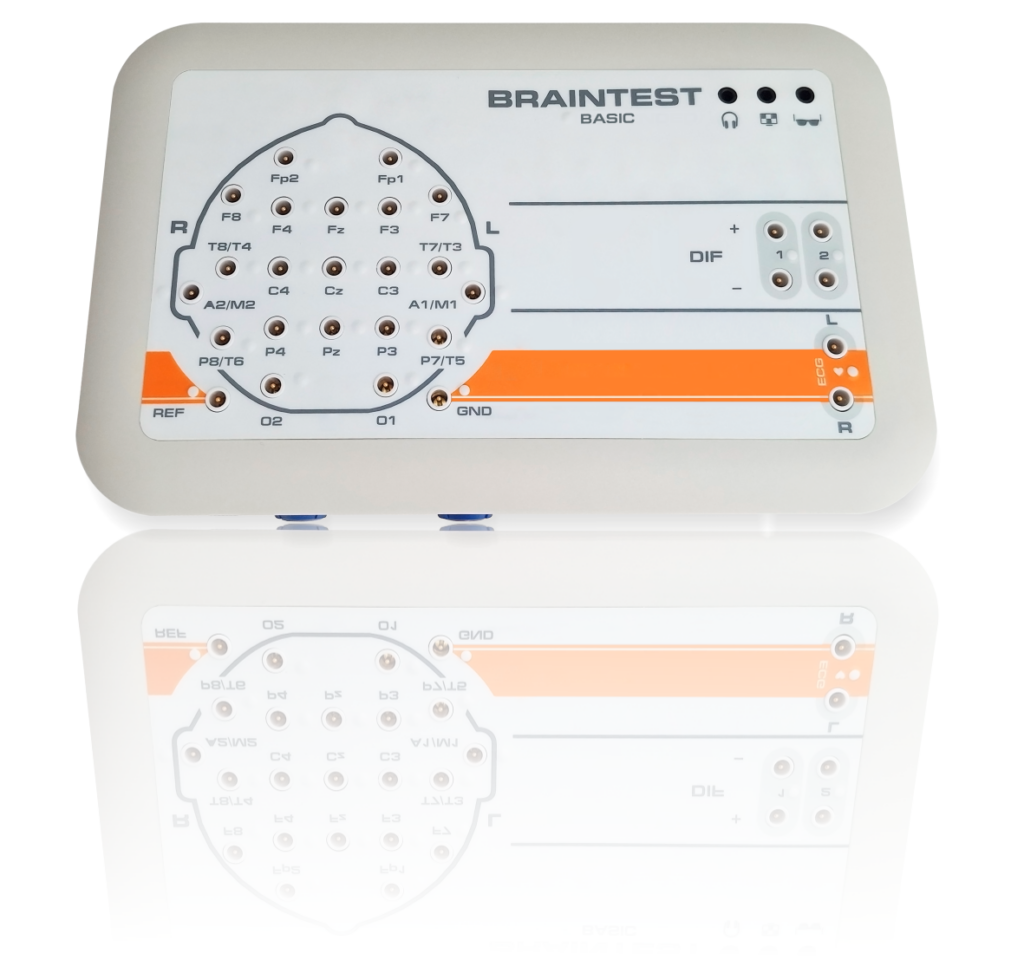
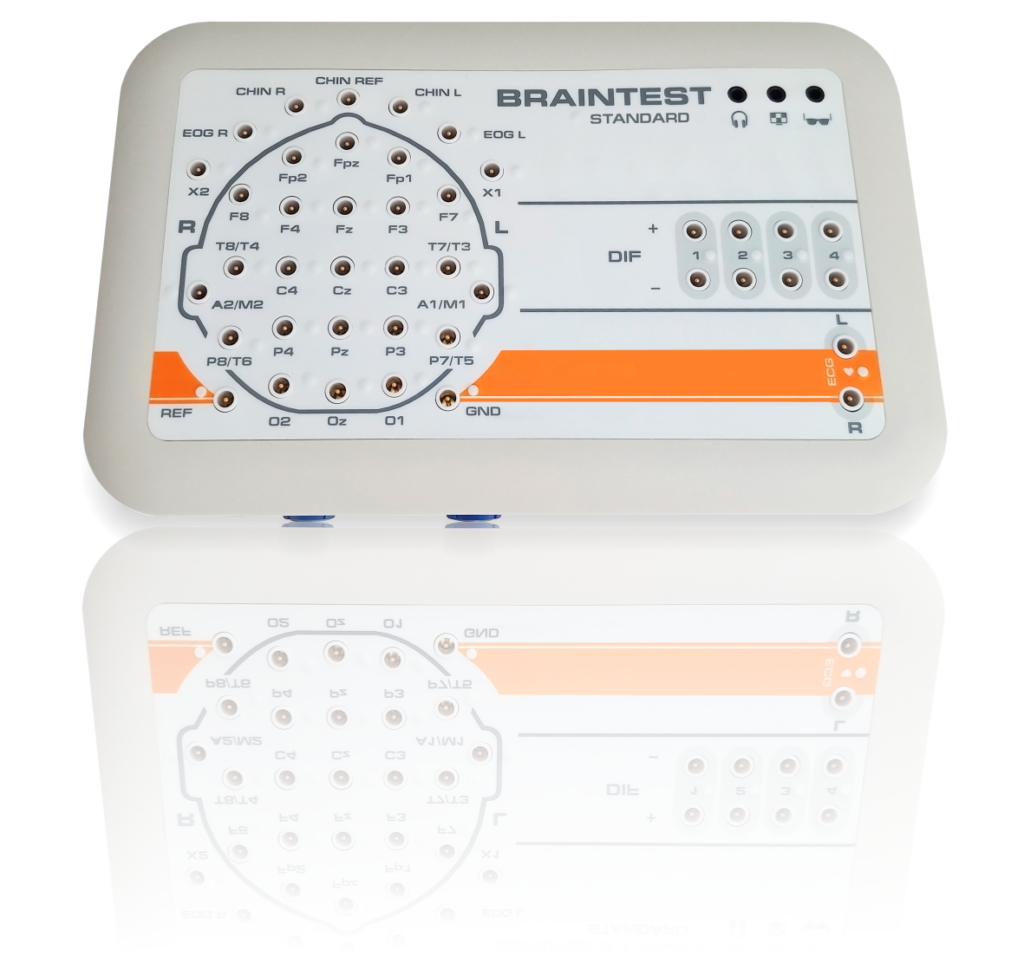
Models:
|
EVOKED POTENTIALS |
Long-latency auditory and visual, cognitive |
|
VIDEO MONITORING |
Long-term synchronous EEG and video recording (up to 72 hours) |
Additional modules, at the customer’s request, are supplied with all EEG models of the BRAINTEST and BRAINTEST PLUS series.
| Value | ||
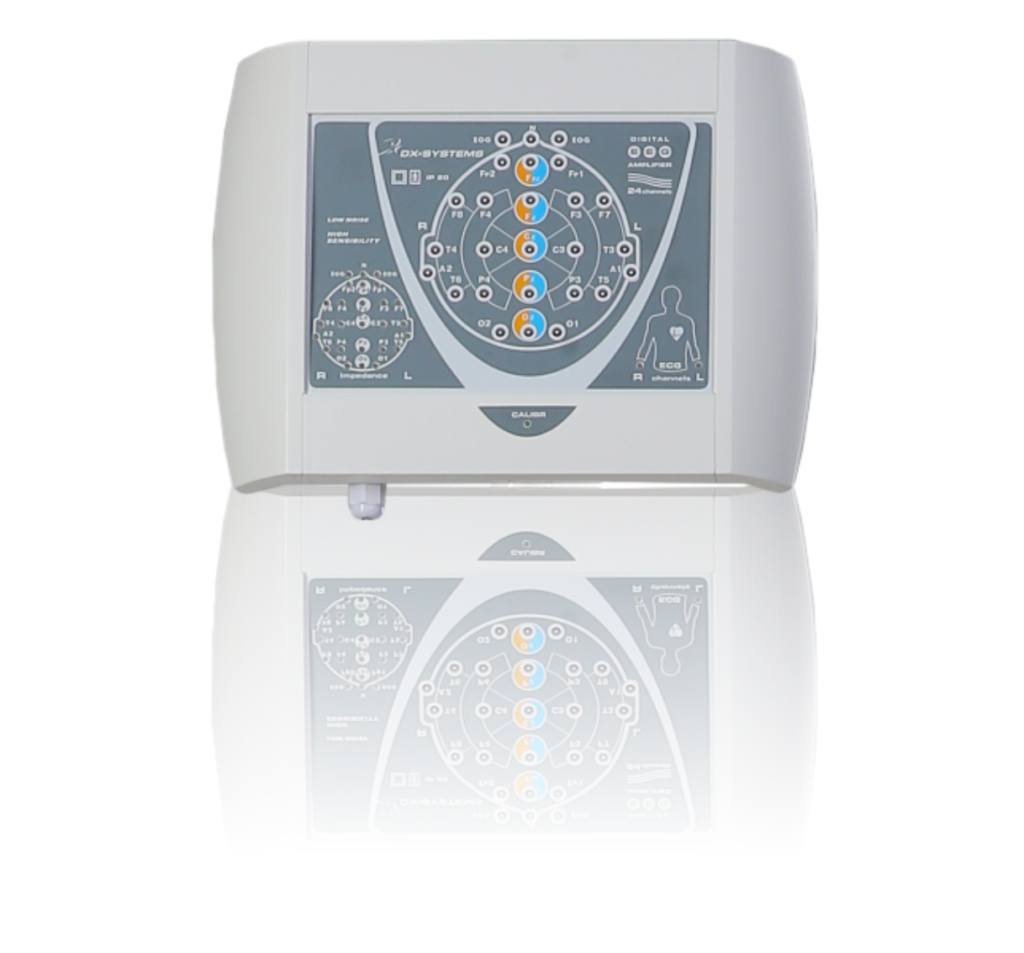
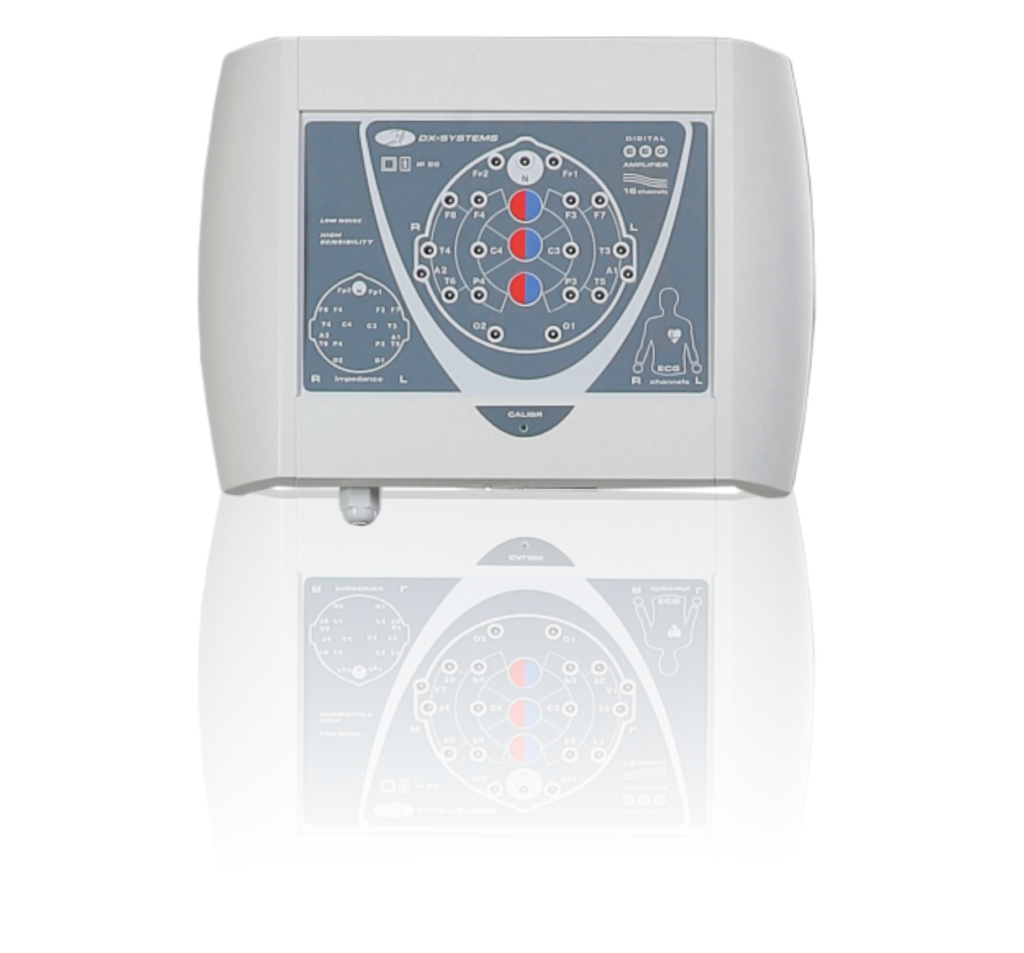
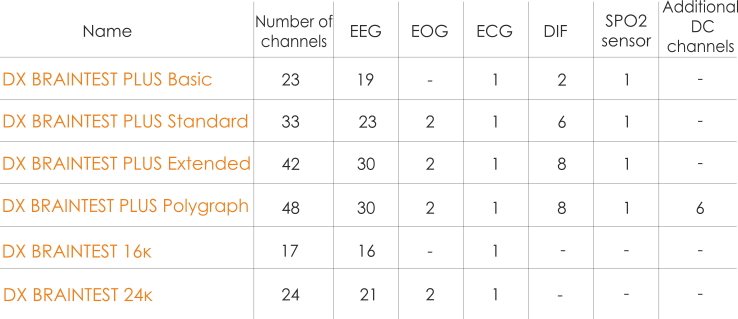
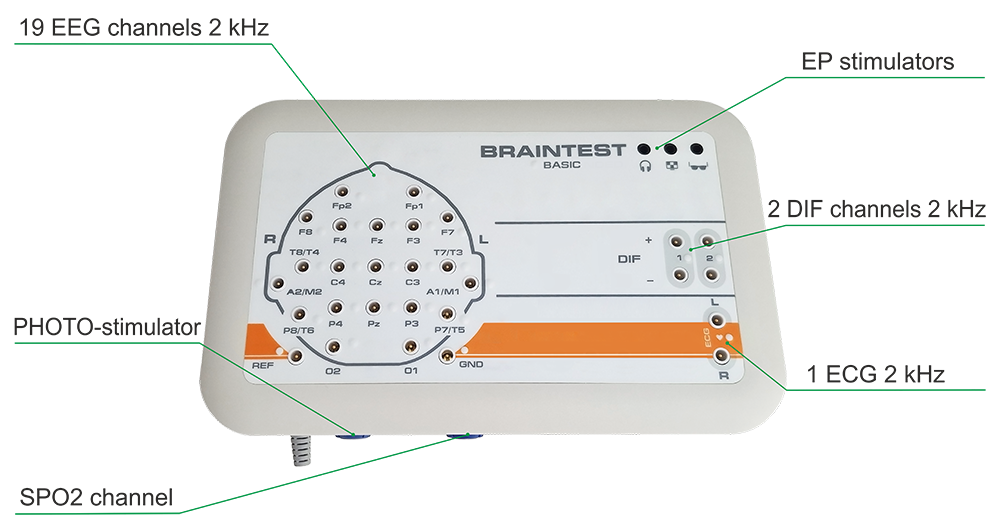
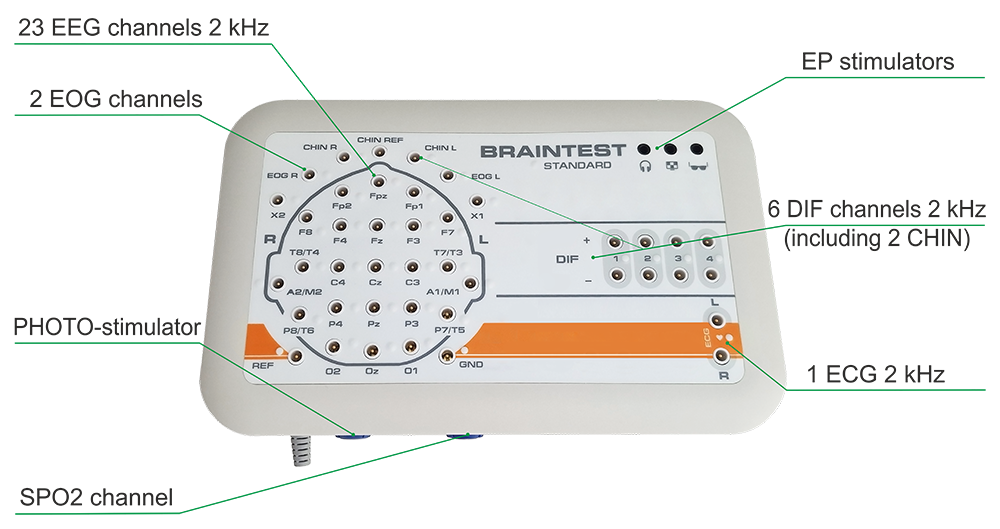
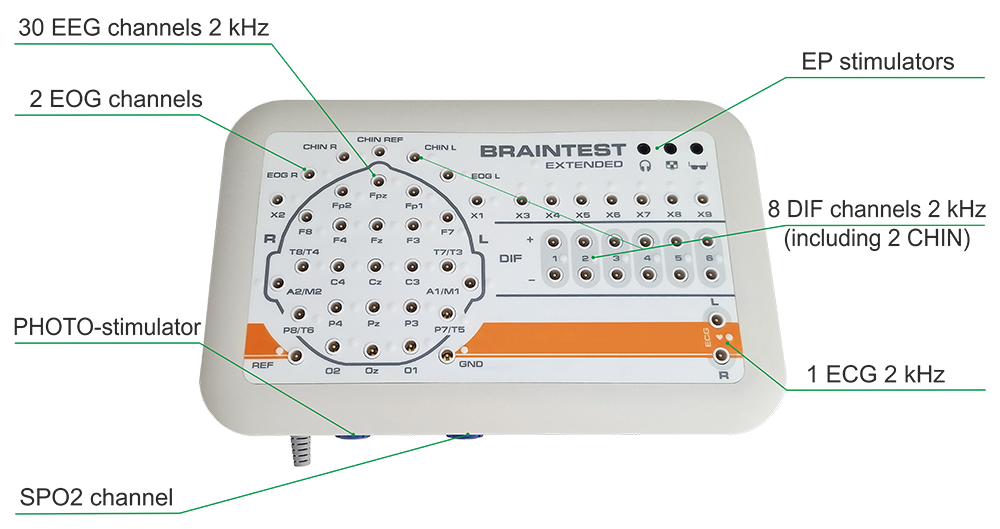
BRAINTEST-16 | BRAINTEST-24 | BRAINTEST PLUS | |
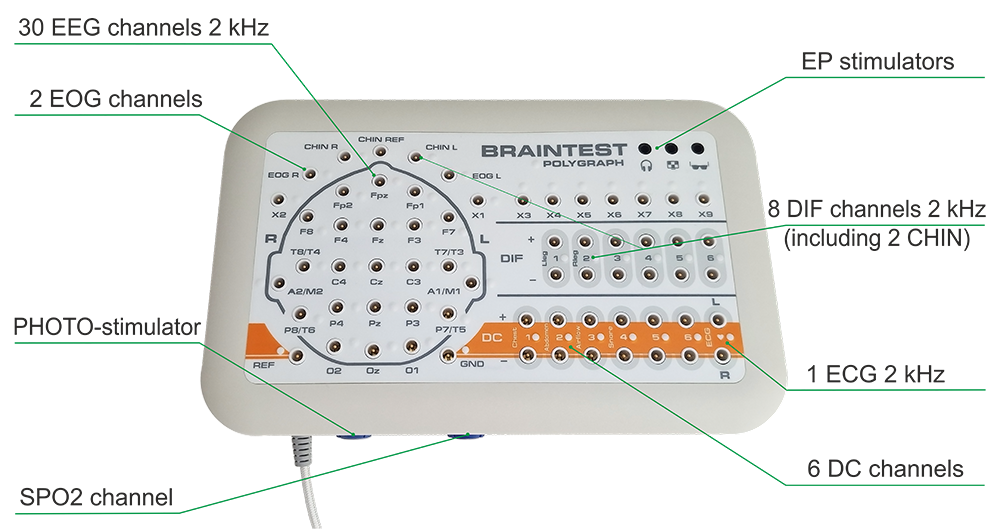
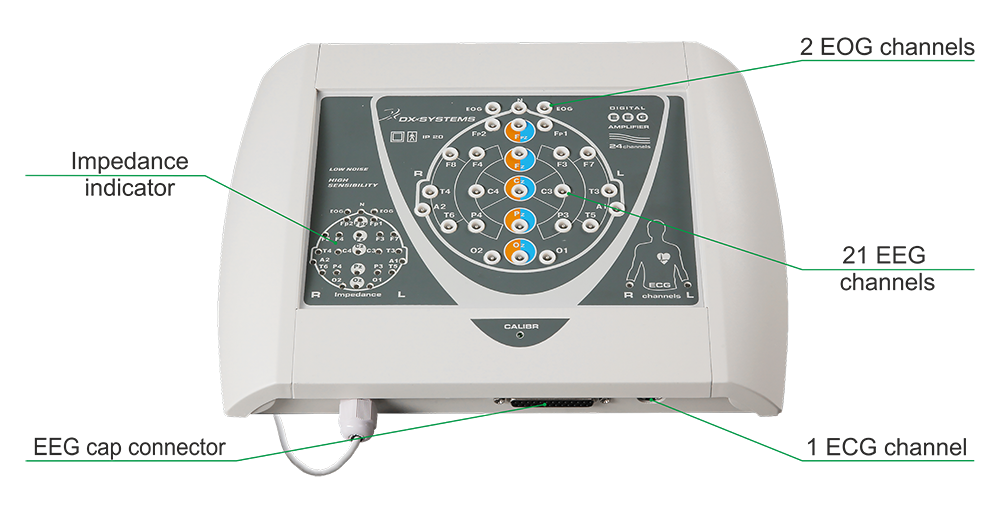
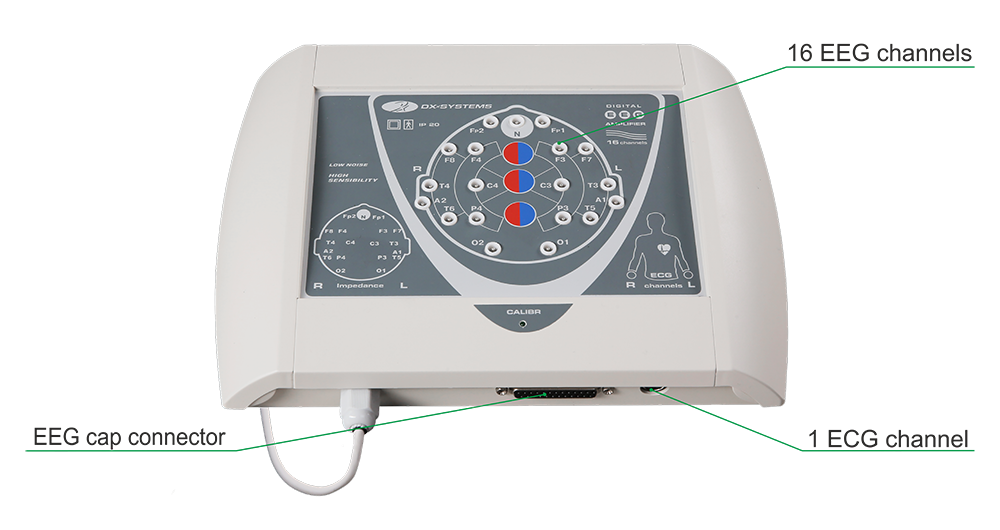
Number of EEG channels | 16 | 21 | 19 / 23 / 30 |
Nunmer of DIF channels | — | — | 2 / 6/ 8 |
Number of EOG channels | — | 2 | 2 |
Number of SPO2 channels | 1 | 1 | 1 |
Number of ECG channels | 1 | 1 | 1 |
Direct current channels | — | — | 6 |
Input signal detection range | 1 – 2000 µV | 1 – 4000 µV | ± 300 mV with the possibility of increasing to ± 2.4 V |
Internal noise voltage, summed to the input (rms) |
– |
– |
≤ 1 µV |
Input signal frequency range | 0.5 – 75 Hz | 0.5 – 75 Hz | 0.16 – 200 Hz |
Sampling rate | 400 Hz | 1000 Hz | 500 / 1000 / 2000 Hz |
High/Low Pass Filters | 0.16…2 Hz / 15…100 Hz | ||
Attenuation coefficient of a common-mode signal at a frequency of 50 Hz · EEG channels · DIF channels |
≥ 100 dB — |
≥ 100 dB — |
≥ 105 dB ≥ 120 dB |
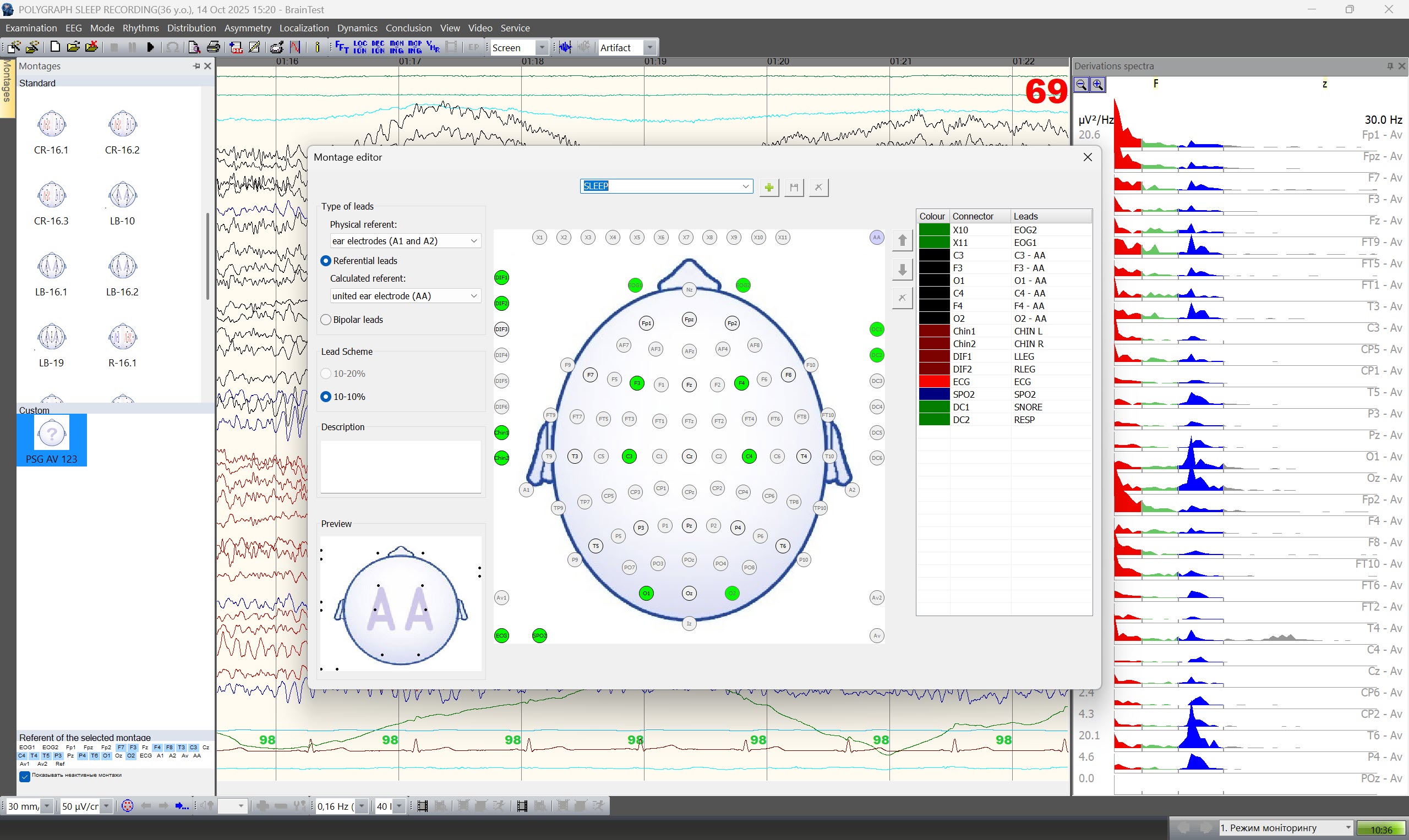
The user interface can be customized to meet the physician’s specific workflow. A dedicated Montage Tool allows configuration of mono- and bipolar electrode sets.
Profiles can be created for particular diagnostic tasks, including predefined protocols with required functional tests. LED impedance indicators provide continuous feedback on electrode contact quality both during placement and throughout the recording session.
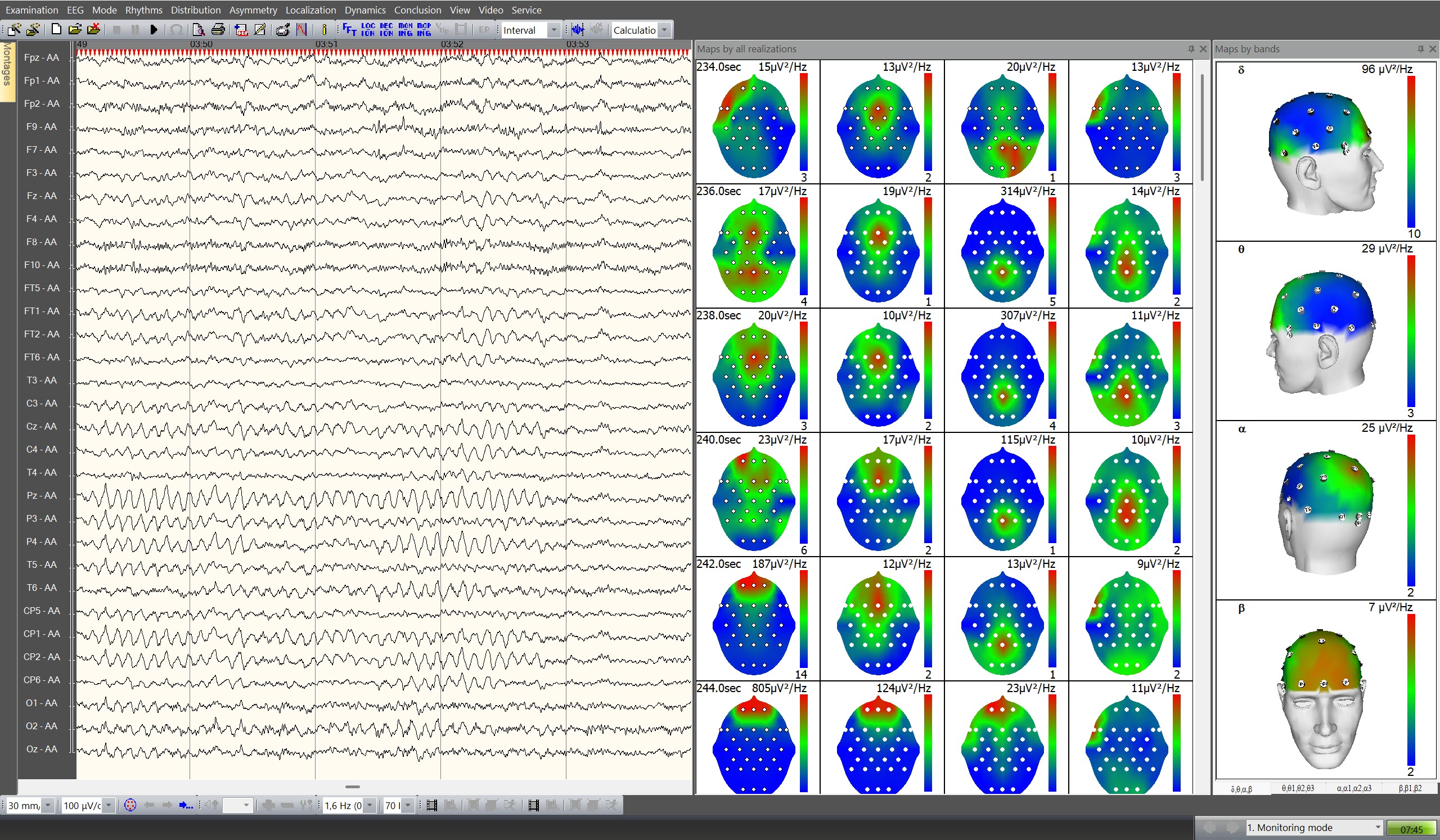
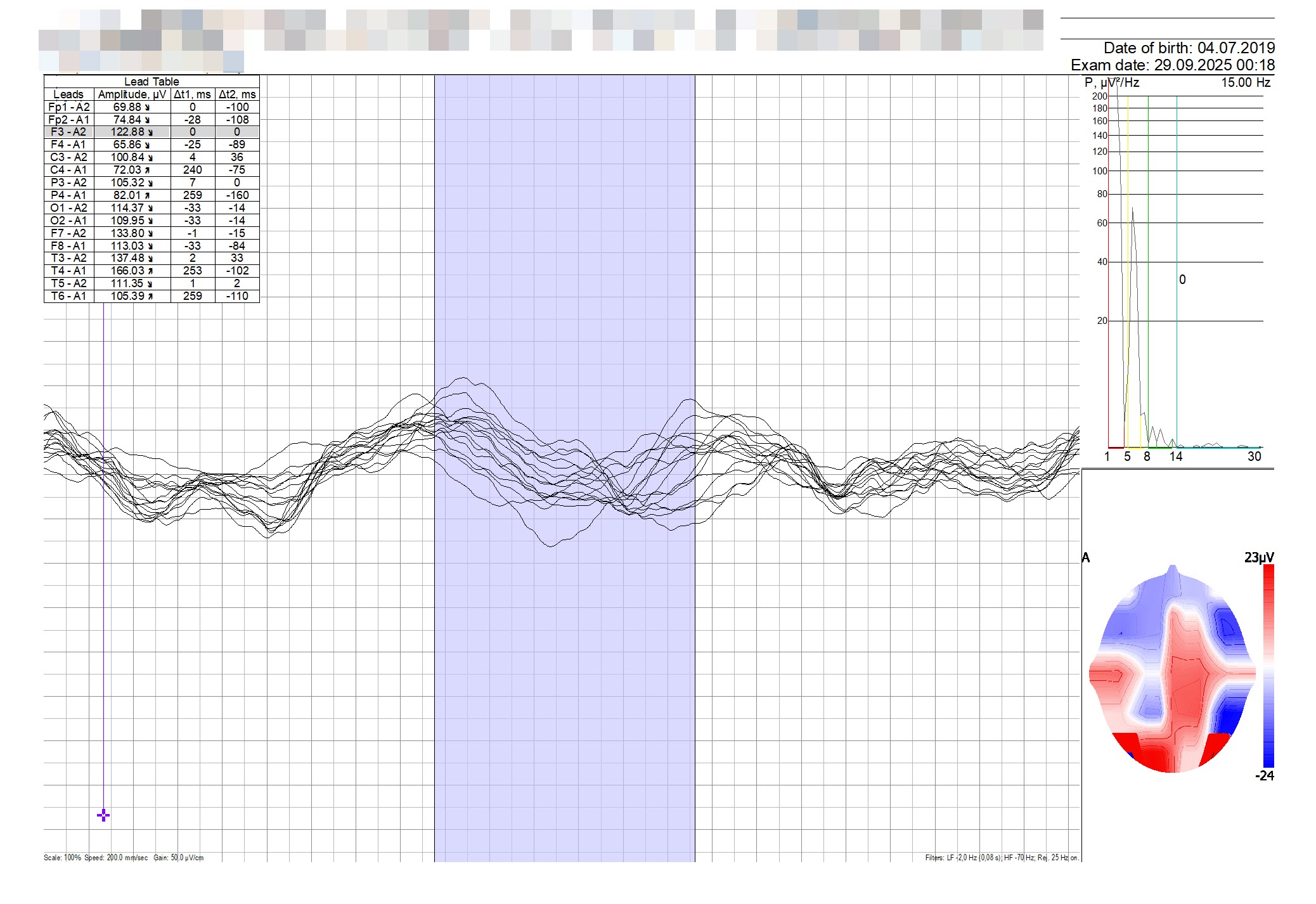
The software supports real-time 2D and 3D brain mapping of EEG amplitude and power, with on-screen visualization during acquisition or review.
Simultaneous EEG and video recording enables direct observation of patient behavior during EEG acquisition. This integrated approach improves diagnostic accuracy and supports precise classification of pathological events.
Comprehensive analysis tools allow review of any EEG fragment or the entire recording.
Amplitude analysis, including chronodispersion of peaks, supports identification of primary pathological activity. Amplitude mapping further visualizes polarization processes.
The software includes a broad range of advanced EEG analytics:
EEG mapping options include:
Topographic maps can be generated from any EEG segment or functional test, with both 2D and 3D visualization available.
The system also supports heart rate variability (HRV) analysis using multiple approaches:
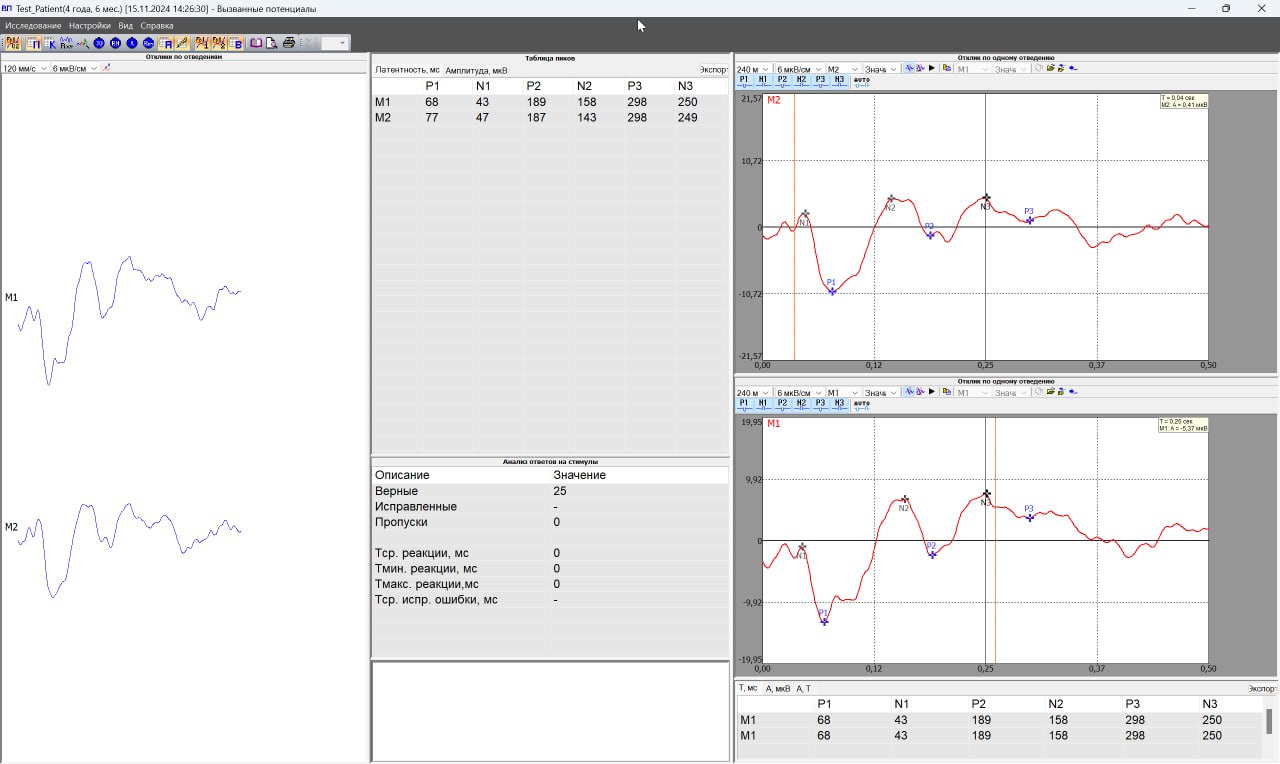
For evoked potentials, the software supports analysis of auditory, visual, and cognitive paradigms, including patient responses to stimuli.
An automatic EEG report generator provides a preliminary description, including spectral analysis, functional test outcomes, amplitude-time parameters, and quantitative measures.
The physician may edit, expand, or completely rewrite the report.
Built-in templates and a Q&A Wizard allow quick structured report generation tailored to complexity and volume.
Layout is fully customizable: selected EEG segments, video frames, maps, graphs, diagrams, and histograms can all be included in the printed report.